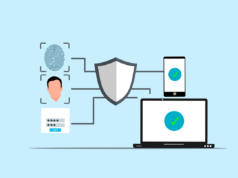

Multi-party computation (MPC) provides a robust framework for improving security and privacy in cryptocurrency custody. By distributing cryptographic operations among multiple participants, MPC eliminates single points of failure common in traditional key management. Threshold encryption schemes ensure that no single party can access sensitive asset credentials, requiring collaboration within a predefined subset to authorize transactions.
The integration of MPC with distributed blockchain protocols combines decentralization with strong authentication and consensus mechanisms. This approach enhances protection against insider threats and external attacks by replacing centralized private keys with shared secrets split across multiple nodes. Real-world implementations, such as multi-sig wallets leveraging threshold signatures, demonstrate improved resilience in cryptocurrency exchanges and custodial services.
Secure management of digital assets depends on embedding MPC in scalable protocols, enabling seamless transaction verification without exposing key material. Collaborative MPC schemes facilitate cross-institutional asset control while maintaining compliance with security standards. As regulatory frameworks evolve, combining MPC with advanced cryptography offers a promising path for institutional-grade custody solutions, mitigating risks associated with centralized private key storage.
Future developments in this field focus on enhancing protocol efficiency and interoperability between multi-party systems and existing blockchain networks. Optimized consensus layers and innovative threshold schemes will further elevate the security posture of digital asset custody, pushing boundaries in how trustless environments secure high-value cryptocurrency holdings.
Multi-Party Computation in Asset Custody
Implementing multi-party computation (MPC) for asset custody significantly enhances security by eliminating single points of failure inherent in traditional key management. By splitting private keys into multiple shares distributed among different parties, threshold protocols enable collaborative cryptographic computation without revealing individual key fragments. This distributed approach ensures that a defined quorum must agree to authorize any transaction, strengthening authentication and protecting assets in cryptocurrency environments.
MPC protocols operate within decentralized blockchain frameworks, leveraging consensus mechanisms to verify computations securely. For instance, in digital asset management, MPC allows institutions to conduct signature generation off-chain while maintaining privacy and security without exposing key material to any single custodian. This method reduces risks associated with theft or insider threats, as no single entity ever holds the full private key.
Real-world implementations, such as institutions managing large cryptocurrency reserves, utilize threshold schemes with multi-party computation to conduct secure signing operations. These protocols support complex workflows like cold storage access and cross-border arbitrage trading, where rapid yet secure authentication is critical. The collaboration between multiple independent nodes performing distributed computation ensures resilience against cyber-attacks and system failures.
Advanced Cryptography in Collaborative Custody
Modern MPC protocols integrate zero-knowledge proofs and secure multi-party authentication schemes to enhance privacy within asset custody processes. By combining these cryptographic techniques, custodians can validate transaction legitimacy through collective consensus without exposing sensitive information. This approach aligns with emerging regulations demanding strong proof of secure management while preserving user privacy.
Market trends indicate growing adoption of MPC-based custody solutions among institutional investors aiming to meet regulatory compliance and mitigate operational risks. Future developments focus on optimizing computational efficiency and interoperability between blockchain networks, enabling seamless multi-asset management with robust security guarantees grounded in cryptography and decentralization principles.
Threshold Schemes for Key Management
Implementing threshold schemes significantly strengthens key management within asset custody by distributing cryptographic secrets across multiple parties. This approach eliminates single points of failure, requiring a predefined quorum of collaborators to perform authentication or cryptographic operations. In practice, threshold protocols split private keys into shares, ensuring that no single entity can access or misuse the full key without consensus.
Advanced threshold encryption leverages multi-party computation (MPC) to allow secure joint computation on shared keys without reconstructing them outright. For example, in cryptocurrency custody, a typical threshold scheme might require 3 out of 5 key shares to authorize a transaction. This collaborative management enforces decentralization and enhances security by mitigating risks from insider threats or key compromise.
Practical Applications and Security Benefits
Real-world custodians using threshold protocols demonstrate significant reductions in breach risks. By distributing key shares geographically and organizationally, custodians align with blockchain’s decentralization ethos while maintaining robust privacy controls. Companies like Fireblocks and Curv employ such protocols to secure billions in digital assets, combining threshold cryptography and MPC to facilitate secure, off-chain transaction signing.
Threshold schemes also strengthen authentication processes by integrating with multi-factor systems and biometric verification, ensuring that multi-party approvals are both cryptographically sound and user-friendly. The underlying cryptography supports fault tolerance; if some key holders are unavailable, the protocol still operates securely, preserving asset custody continuity without sacrificing security.
Future Directions in Threshold Key Management
Emerging research in threshold ECDSA (Elliptic Curve Digital Signature Algorithm) and threshold Schnorr signatures addresses scalability and efficiency bottlenecks, enabling on-chain enforcement of collaborative agreements without exposing private keys. This evolution aligns with blockchain network demands, facilitating secure consensus participation without sacrificing decentralization or privacy.
Integrating these protocols with zero-knowledge proofs and verifiable computation enhances transparency and auditability for custodians, satisfying compliance needs while protecting encryption assets. As the cryptocurrency ecosystem matures, threshold schemes will form the backbone of secure, collaborative digital asset custody, elevating both operational security and trust in blockchain infrastructures.
Preventing Single Point Failures
Implementing a distributed multi-party computation (MPC) protocol is critical for eliminating single point failures in asset custody. By dividing cryptographic keys across multiple independent nodes through threshold schemes, no single entity holds complete control over digital assets, significantly reducing risk vectors associated with key compromise or insider threats. This distributed approach ensures continuous security and availability even if some nodes become inaccessible or are maliciously targeted.
For secure authentication and transaction approval, collaborative encryption within MPC frameworks requires a minimum threshold of participants to engage in joint computation, preserving privacy and preventing unauthorized access. Real-world applications demonstrate that decentralization in blockchain custody enhances resilience: failures in individual nodes, such as hardware faults or targeted cyberattacks, do not halt asset management, maintaining operational integrity. For example, large cryptocurrency exchanges use threshold cryptography and distributed signing protocols to verify transactions without exposing full private keys, thereby mitigating catastrophic single-point failures.
Robust management involves integrating failover mechanisms alongside MPC protocols. Combining multi-party computation with secure protocol layers and automated auditing tools strengthens asset custody workflows, allowing continuous monitoring and immediate response to irregularities without exposing sensitive data. This approach aligns well with evolving market demands where secure, scalable custody solutions are essential for institutional cryptocurrency holdings and sophisticated trading strategies like arbitrage, which depend on rapid, uninterrupted access to assets.
Real-Time Transaction Authorization
Implementing real-time transaction authorization within multi-party computation (MPC) protocols enhances secure asset custody by enabling instant, collaborative decision-making on blockchain transactions. Distributed threshold computation allows multiple custodians to jointly authenticate transactions without exposing private keys, maintaining encryption integrity throughout the process.
To achieve effective real-time authorization, custody systems must employ synchronous MPC protocols with low-latency consensus mechanisms. For example, integrating state-of-the-art threshold cryptography algorithms such as Shamir’s Secret Sharing combined with elliptic curve cryptography supports dynamic, rapid reconstruction of authorization signatures only when a predefined threshold of parties consents.
Key Components for Secure Real-Time Authorization
- Low-latency Collaborative Computation: Utilizes parallel processing among distributed parties to minimize delays in transaction signing, critical for time-sensitive cryptocurrency trades and arbitrage operations.
- Robust Authentication Protocols: Employ multi-factor, multi-party authentication layers increasing resistance to unauthorized access and insider threats during transaction approval.
- Adaptive Threshold Schemes: Adjust threshold parameters dynamically based on transaction risk profiles or asset value, balancing security with operational agility.
- End-to-End Encryption: Ensures that communication between parties in the key management lifecycle remains confidential and tamper-proof, aligning with privacy regulations across jurisdictions.
- Consensus-Driven Decision Making: Prevents single point failures by requiring agreement from multiple participants, reinforcing the distributed nature of custody and authentication.
Case Study: MPC in Cryptocurrency Exchange Custody
Leading cryptocurrency exchanges have leveraged MPC-based real-time transaction authorization to reduce withdrawal fraud and enhance wallet security. By distributing key shares among geographically diverse servers, exchanges maintain uninterrupted, secure asset management despite potential server outages or cyber-attacks. In one documented instance, integrating MPC protocols cut fraud incidents by 40% and reduced transaction approval times from several minutes to under ten seconds, optimizing trade execution and customer trust.
Future developments in MPC for real-time authorization are focusing on zero-knowledge proofs and homomorphic encryption integration. These advances aim to enable transaction validation without revealing sensitive data, further strengthening privacy while maintaining rigorous security protocols for asset custody and management within blockchain ecosystems.