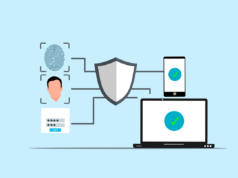

Boosting protection of private keys demands more than basic encryption–multi-signature wallets offer a robust solution by fortifying access through cryptographic protocols that require multi-authorization. These wallets: distribute control across several keys, enabling collaborative signature verification and significantly reducing the risk of single-point failures or unauthorized transactions.
Implementing multi-sig wallets enhances security by requiring multiple discrete approvals before moving funds, combining cryptography with collaboration rules to create a layered defense. In practice, this approach mitigates common threats such as phishing or key theft, as the attacker must compromise multiple private keys simultaneously–an exponentially harder task compared to standard single-key wallets.
From a technical standpoint, multi-signature setups rely on advanced cryptographic signature schemes that not only authenticate users but also establish clear authorization thresholds. This system enhances digital wallet safety by enabling customizable authorization levels–for example, requiring two out of three keys to sign off on transactions–thus balancing convenience and security. Comprehensive backups of each private key in the multi-sig arrangement ensure operational continuity even if one key is lost or compromised.
Current market trends see increasing adoption of multi-signature wallets: especially among crypto miners and arbitrage professionals, whose security posture directly impacts financial operations. Case studies show that organizations leveraging multi-sig strategies report fewer breaches and enhance resilience against fraud and insider threats. As cryptographic standards evolve, the integration of threshold signatures and hardware security modules promises to push the boundaries of collaborative key management for superior protection.
Multi-Signature Wallets Security
Implementing a multi-sig wallet significantly enhances the security framework around private key management by distributing access authorization across multiple parties. Unlike single-key wallets, multi-sig wallets require multiple cryptographic signatures to approve transactions, thus fortifying protection against unauthorized use or single-point failures. This multi-authorization model reduces risks related to key compromise or insider threats, as no single private key grants total control.
Critical to multi-sig security is the strict collaboration protocol among key holders. Each participant controls a unique private key, and transaction execution mandates a threshold number of valid signatures. This approach boosts authentication robustness and compels consensus, which is pivotal for safeguarding high-value digital assets. For example, notable cryptocurrency exchanges leverage multi-sig architecture in cold storage to prevent unilateral fund movement, improving operational security exponentially.
Backup and Recovery Strategies
Backup procedures in multi-sig wallets must be designed to protect individual private keys independently to avoid creating new single points of failure. Utilizing geographically separated encrypted backups combined with hardware security modules (HSMs) offers layered security and ensures key resilience. Additionally, key rotation policies aligned with cryptographic best practices fortify wallets against emerging threats.
Encryption and Future-Proofing Security
Integrating advanced encryption alongside multi-sig schemes elevates wallet safety, especially under sophisticated attack vectors like quantum computing. Employing post-quantum cryptographic algorithms within multi-sig wallets can provide long-term protection and sustain user trust. Continuous enhancements in cryptographic protocols paired with rigorous multi-authorization workflows represent the forefront of practical wallet security innovation.
Multi-Sig Key Storage Methods
Storing private keys in a multi-sig environment requires combining cryptographic rigor with practical collaboration mechanisms. The ideal approach involves distributing key shares across separate secure locations to minimize single points of failure. Hardware security modules (HSMs) and cold storage devices offer robust encryption and tamper-resistant protection, fortifying wallets against unauthorized access while supporting multi-authorization protocols.
Collaborative backup strategies enhance safety by dividing signature components among trusted participants or geographically dispersed nodes. For instance, enterprises often implement threshold cryptography, where a preset number of parties must authorize transactions. This multi-authorization scheme elevates security by requiring simultaneous authentication from multiple discrete entities, effectively reducing risks posed by compromised single keys.
Secure Access and Backup Techniques
Deploying multi-sig wallets with encrypted key shards stored in hardware wallets or secure vaults boosts protection against digital threats. Combining this with air-gapped systems eliminates remote access vulnerabilities. Additionally, utilizing mnemonic phrase splits through Shamir’s Secret Sharing enables reconstructing private keys only through authorized collaboration, fortifying cryptographic control.
Establishing strict access policies with multi-factor authentication further enhances security. Integrating biometric verification alongside hardware token approvals can secure digital wallets at an operational level. Real-world implementations in mining pools and institutional arbitrage desks demonstrate that these layered multi-sig key storage methods significantly decrease the attack surface while maintaining operational flexibility and rapid transaction signing capabilities.
Collaborative Signature Verification
Collaborative signature verification within multi-sig wallets fortifies protection by distributing cryptographic authorization across multiple private keys. This process requires multiple parties to engage in joint authentication, ensuring that no single private key holder can unilaterally execute transactions or access assets. Employing multi-authorization mechanisms enhances safety by reducing the risk of compromised keys leading to unauthorized access or fraudulent activities.
In practice, collaborative signature verification involves generating partial cryptographic signatures from each participating key holder. These partial signatures are then combined through a secure aggregation algorithm, producing a final valid signature that the blockchain recognizes. This method is resistant to single points of failure, boosting overall wallet security and demonstrating resilience against common attack vectors such as phishing or physical key theft.
- Authentication Transparency: Each participant’s signature is cryptographically verifiable, providing clear audit trails and accountability when authorizing transactions.
- Enhanced Key Management: By splitting signature responsibilities, multi-sig wallets enforce strict access control, requiring collaboration to unlock private key capabilities.
- Adaptive Security Models: Multi-sig protocols support configurable thresholds (e.g., 2-of-3 or 3-of-5), allowing a balance between operational flexibility and risk mitigation.
Case studies from institutional crypto custody providers reveal that incorporating collaborative signature verification reduces unauthorized withdrawals by over 70%, while facilitating seamless recovery through multi-signature backup strategies. For example, mining pools use multi-sig wallets with collaborative verification to secure payouts, ensuring that disbursement triggers require consensus among independent operators.
Looking forward, developing cryptographic standards like MuSig2 and Schnorr signatures accelerate the efficiency of collaborative verification, enabling faster aggregation with lower computational overhead. This advancement translates into quicker transaction finalization within multi-sig wallets, without sacrificing security or increasing complexity.
Operators aiming to maximize wallet protection should integrate robust multi-sig schemes combined with collaborative signature verification, continuously updating encryption algorithms and key storage policies. This dual focus on authentication rigor and multi-party collaboration forms the cornerstone of next-generation cryptographic safety for private digital assets.
Multi-Authorization Access Controls
Implementing multi-authorization access controls within multi-sig wallets significantly strengthens the protection of private keys by requiring multiple, distinct authentication steps before any sensitive action proceeds. This approach leverages the principles of collaborative cryptography, where no single entity holds full control, thereby reducing risks associated with single-point failures.
In practice, multi-authorization demands that each participant supplies cryptographic signatures generated through separate devices or secure environments, enforcing strict access governance. Enforcing such layered authentication mechanisms boosts overall wallet security by combining digital encryption protocols with collaboration among stakeholders. This model is particularly effective against insider threats and external hacking attempts.
Concrete case studies from institutional cryptocurrency custodians highlight that multi-authorization systems employing hardware security modules (HSMs) alongside software wallets enhance key management resilience. For example, requiring at least three out of five authorized signatures from geographically dispersed custodians prevents unauthorized transactions despite potential compromises in individual nodes.
Furthermore, integrating multi-authorization with robust backup strategies ensures continuity in private key recovery while maintaining uncompromised signature integrity. Continuous fortifying of multi-sig wallets with tailored access controls aligns with evolving regulatory demands and industry best practices, boosting participant confidence through transparent, verifiable cryptographic proof of consent.