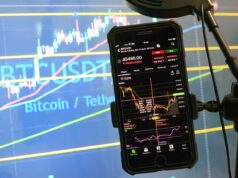

Crypto investors can access live prices, wallet records, exchange exports and market commentary within seconds. The difficulty is no longer finding information, but converting it into a reliable picture of performance and risk. A portfolio may be spread across several platforms, contain assets purchased at different times and include staking rewards, network fees, internal transfers and fresh deposits. Looking only at the current balance can hide how the result was produced.
AI-assisted platforms can reduce the manual work involved in organising and reviewing this information. Tools available through https://www.finmetryai.com/ are designed to analyse financial data, automate elements of reporting, examine trends and support forecasting. For crypto users, such capabilities are most useful when they form part of a controlled research process rather than being treated as a source of automatic trading instructions.
Why portfolio value is not the same as investment performance
A higher closing balance does not necessarily mean that an investment strategy has succeeded. The increase may come from new deposits, token rewards or funds transferred from another account controlled by the same investor. Similarly, a lower balance may reflect a withdrawal rather than a market loss.
A meaningful report should separate external cash flows from changes caused by asset prices. It can show the opening value, deposits, withdrawals, realised results, unrealised valuation changes, rewards and fees. This breakdown explains how the final figure was reached and makes comparisons between periods more accurate.
Transaction costs also need to be visible. Exchange commissions, withdrawal fees, blockchain charges and conversion spreads may reduce returns without standing out in a wallet interface. The effect can be particularly significant for users who trade frequently or move relatively small amounts between networks and platforms.
Start by creating a dependable dataset
Exchange and wallet exports rarely follow one standard format. Dates may be written differently, the same token may use several labels, and a transfer can appear in files from both the sending and receiving platforms. Combining those records without preparation can lead to duplication and incorrect classifications.
A basic consolidated ledger should include the date, asset, quantity, type of transaction, account, value in a chosen reporting currency and associated cost. Accounts and wallet addresses controlled by the same owner should be labelled clearly so that internal movements are not mistaken for income or expenditure.
- Use one date, time and currency format throughout the file.
- Separate purchases, sales, deposits, withdrawals and internal transfers.
- Record trading, network, conversion and withdrawal fees independently.
- Classify staking rewards, airdrops and other distributions separately.
- Remove duplicate records created by combining multiple exports.
- Mark missing information instead of silently replacing it with zero.
The analytical system can only work with the meaning supplied by the data. A blockchain confirms that an asset moved, but it does not explain whether the movement was a purchase, refund, collateral deposit or treasury transfer. Accurate labelling remains a human responsibility.
Ask a specific question rather than requesting a general verdict
A prompt such as “analyse my crypto portfolio” leaves too many choices to the system. It must decide which period to review, which metrics matter and what risk means for the user. A narrower question creates an output that is easier to inspect and reproduce.
An investor might ask which positions contributed most to a quarterly loss, how asset concentration changed after a market rally or how much of the portfolio remains immediately accessible. Another useful request could compare total fees across several platforms or identify transactions that do not fit established categories.
A well-structured request normally specifies the accounts included, reporting period, valuation currency, classification rules and expected output. The user can ask for a table of calculations, a separate explanation of major changes and a list of missing or questionable records. Requiring the system to distinguish facts from interpretations makes the final report more transparent.
Measure concentration from several angles
Owning many tokens does not automatically create diversification. One asset may represent most of the total value, while several smaller positions may depend on the same blockchain, exchange, stablecoin or source of liquidity. These shared dependencies can cause supposedly different holdings to react to the same event.
An AI-assisted review can calculate exposure by asset, platform, network and liquidity category. It can also compare current weights with a previous allocation. This matters after a strong price movement because a position may become dominant even when no additional tokens have been purchased.
Allocation drift is a reason to reassess the portfolio, not an automatic instruction to trade. Rebalancing may involve fees, tax consequences, reduced liquidity or a change in the original investment thesis. The system can identify the deviation and calculate alternatives, but suitability depends on the investor’s circumstances and risk limits.
Look beyond market risk
Price volatility is only one source of uncertainty. A portfolio can also be exposed to exchange failure, restricted withdrawals, compromised credentials, bridge vulnerabilities, smart-contract problems and the loss of access to a private wallet. Holding different tokens on one platform may diversify market exposure without reducing operational dependence.
Liquidity should therefore be reviewed alongside market value. Assets available on a liquid exchange belong in a different category from tokens locked in staking arrangements or traded in shallow markets. A quoted price is less useful when selling a meaningful position would create substantial slippage or require a long waiting period.
UK readers should also distinguish analysis from regulatory protection. The FCA overview of the UK cryptoasset regime explains the developing regulatory framework and its scope. Regulation can introduce standards and consumer safeguards, but it does not remove market losses, technology failures or the need to assess each service carefully.
Use scenarios instead of one precise prediction
Crypto markets are too uncertain for a single future price to serve as a dependable planning tool. Scenario analysis is more practical because it examines what would happen under several defined conditions without claiming that one of them will certainly occur.
A downside scenario may apply different declines to major assets and less liquid tokens. An access scenario could assume that funds held on one platform are temporarily unavailable. Other tests may examine higher network fees, reduced stablecoin value, increased correlation or a longer period before staked assets can be withdrawn.
The purpose is to locate fragility. If a modest decline in one asset creates an unacceptable total loss, concentration may be too high. If short-term financial needs depend on locked positions, liquidity is the more immediate concern. AI can recalculate several cases quickly, while the investor remains responsible for choosing realistic assumptions.
Separate calculations from explanations
An AI-generated report may contain correct arithmetic and an unsupported narrative at the same time. A fall in portfolio value can be confirmed from the data. A claim that the fall resulted from a particular news event or shift in market sentiment requires separate evidence.
The same pattern may have several causes. Increased wallet activity could reflect user growth, automated transactions, internal transfers or an incentive campaign. A decline in returns might result from price movements, missing records, unusually high fees or incorrect treatment of withdrawals.
The user should ask the system to present calculations, observations, hypotheses and limitations in separate sections. This structure makes it harder for a plausible explanation to be mistaken for a verified fact.
Verify the result independently
Important figures should be checked against the original records. A small control sample is often enough to reveal whether the method is reliable. The user can recalculate one asset balance, one percentage change, one fee total and one portfolio weight in a spreadsheet.
Several questions can improve the review:
- Which transactions had the greatest influence on the result?
- Were transfers between the user’s own accounts excluded from external flows?
- How were token swaps, fees and rewards classified?
- Which records appear incomplete or inconsistent?
- What assumptions were applied to forecasts and scenarios?
- How would the conclusion change under another valuation method?
The growing use of AI in financial services has also attracted regulatory attention. The FCA review of AI in retail financial services discusses potential improvements in efficiency and access alongside concerns involving fraud, cyber security, consumer harm and market concentration. For individual investors, this reinforces the importance of keeping control and verification outside the model.
Understand the team and purpose behind a platform
A product should be evaluated not only by the appearance of its outputs, but also by the problem it is intended to solve. The background to FinMetry.ai provides context for users who want to understand the platform’s broader focus on applying artificial intelligence to financial analysis.
This context should then be compared with the investor’s actual workflow. Someone reviewing one consolidated portfolio file has different requirements from a business analysing large volumes of transactions. A useful pilot begins with one defined task, a controlled dataset and a result that can be compared with an existing manual calculation.
The full effort should be measured rather than the speed of the first response. Time spent preparing data, correcting classifications, verifying calculations and rewriting explanations belongs in the evaluation. A tool creates practical value when it reduces the total workload while preserving or improving analytical quality.
Protect financial and security information
Portfolio analysis does not require control over digital assets. Seed phrases, private keys, recovery codes, exchange passwords and signing credentials should never be entered into an AI platform or stored in an analytical spreadsheet.
Transaction records can still expose sensitive information. Public addresses may reveal balances, relationships between wallets and behavioural patterns. Files may also include customer details, account references or private business information. Unnecessary fields should be deleted or replaced with neutral labels before analysis.
A limited dataset is appropriate for an initial test. It allows the user to evaluate calculation accuracy, output clarity and correction effort without sharing a complete financial history. Access to the resulting reports should also be restricted when they reveal detailed holdings or transaction behaviour.
A repeatable review process
- Collect the records. Export the relevant wallet, exchange and platform histories.
- Standardise the data. Align dates, currencies, account names and transaction categories.
- Reconcile balances. Confirm that recorded activity explains the assets currently held.
- Separate flows from returns. Distinguish deposits, withdrawals, fees, rewards and price changes.
- Measure exposure. Review concentration by asset, platform, network and liquidity.
- Run scenarios. Test market declines, access restrictions and alternative allocations.
- Verify a sample. Repeat selected calculations and investigate discrepancies.
- Document the decision. Record any action taken and the evidence behind it.
Following the same sequence each month or quarter produces a more useful record than reviewing a portfolio only during periods of extreme volatility. It also makes AI-assisted analysis more consistent because the data format, questions and validation standards remain stable.
Keep judgement outside the model
AI can organise records, compare periods, identify anomalies and recalculate scenarios. It cannot determine whether a particular level of risk is suitable for an individual. Income stability, financial obligations, investment horizon, liquidity needs and tolerance for loss do not appear fully in a transaction file.
The strongest approach divides responsibilities clearly. The system performs repetitive analysis and presents structured findings. The investor verifies the inputs, challenges explanations and decides whether action is justified. Used in this way, AI does not remove uncertainty from crypto investing, but it can make that uncertainty easier to identify, measure and discuss.